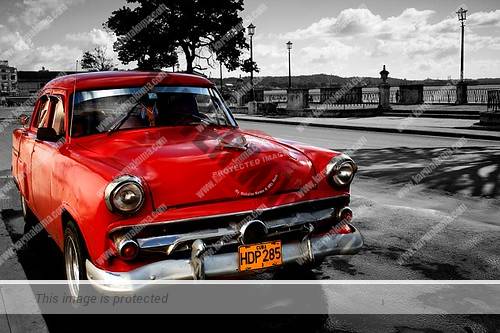
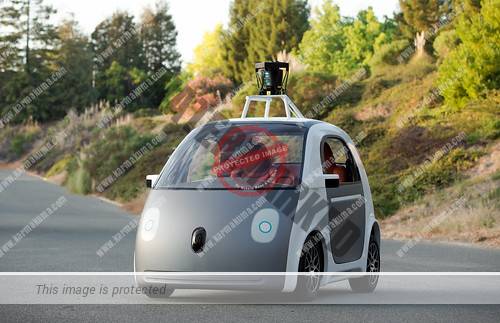
Together with the growth of leading-edge sensor systems such cameras, laser-driven radar and capturing techniques and rising processing potential guided by artificial intelligence, we’re rapidly approaching the day when self-driving vehicles will be sharing the streets with human-driving vehicles. Here’s what to expect when self-driving cars and trucks share the road with us.
Safety
Roadside fatalities assert a little more than a million lives in any a calendar year throughout the world. This public-safety crisis – – mainly because of driver error — has mainly been neglected.
Labor Force
Economically, consumers and businesses alike can hope to save money with transportation. At present, having to pay the driving force accounts for approximately half the price of using a taxi (or Uber). And trucking businesses at this time are currently having difficulties to find enough drivers and this situation is only expected to get worse in the future.
Cleaner cities
Potential motor vehicle fleets shall be electrically driven, which could result in cleaner cities. But if private ownership prevails, there could very well be a great deal more cars and trucks over the street than previously. On the contrary, if driverless motor vehicles end up being part of an integrated transit structure that includes bicycle paths, motor scooters, and improved public transit, we could see a renewed greening of metropolitan areas which requires much less space for on the streets and parking.
Investment
Automating the world’s self-driving fleets would be one of the century’s most significant business options, so it’s no shock that the business leaders are investing billions into this industry which include Ford, Daimler, Toyota, General Motors, Honda, new mobility services like Uber and China’s Didi Chuxing as well as technological innovation leaders such as Google, Intel, and LG.
The experiment
The changeover has already started. Automakers are racing to supply enhanced driver-assistance programs with protection capabilities and warning methods which characterized a serious leap into semi-automated vehicles.
These choices feature adaptive cruise regulate, collision avoidance, and lane-departure warning solutions. The spin-offs from this exploration will also enhance services in other industries such as robotics and aviation.
Insurance
Insurance protection expenditures are very likely to decline as automatic driver-assistance systems scale back the number of mishaps on the road. In the long term, vehicle insurance policy for driver will decrease as responsibility for accidents will shift from drivers to the producers and service companies that provide automated cars.
The insurance companies is simply starting to explore how legal responsibility will likely be shared in semi-automated vehicles among the various parties involved. Furthermore, operating information from autonomous vehicles can provide all vital clues as to how accidents happen in the first place and who should be responsible for the loss.
Public confidence
Autonomous automobiles are no longer confined to Hollywood sci-fi movies. Elon Musk, the founder of Tesla Inc. and SpaceX, believes that in ten years, self-driving vehicles will likely be as familiar as elevators.
A single current survey identified 46% of individuals does not have the confidence self-driving vehicle. It would take time for these new technologies to bring in public trust.
The researchers at the University of Waterloo are now collecting data on winter season driving illnesses in Canada and establishing protocols for autonomous automobiles. they have concluded that self-driving cars with their state-of-the-art sensors, can tackle intense temperature variances due to weather conditions much more efficiently while driving compared to a regular driving vehicle utilizing the human eye. Automatic automobile can see via fog, rain as well as the dark much better than our human eye can see. This makes it much safer than regular car.
Revolution
Business analysts say the technological know-how will probably disrupt or revolutionize the future of transportation as we know it.
Certainly inside five years, we should start to see significantly much larger quantities of autos on the streets that happen to be autonomous. When you’re out driving, you will see a person sitting down there but on their mobile phone without their palms on the wheel.
Automatic automobiles commonly are not a whole new thought. Airlines have been semi-autonomous for several years. A pilot will handle takeoff but autopilot is on a majority of the time and many airplanes will even allow for “auto-landing” even though the pilots keep track of the aircraft.
It is precisely the same idea for self-driving vehicles. At the moment, human still wants a person behind the wheel to intervene. But in general, the car does the driving.
LIDAR
As it drives, an autonomous car or truck in most cases makes use of a technological know-how described as Light Detection and Ranging (LIDAR) which emits thousands and thousands of laser beams for a 360-degree view. Besides, it works by using radar to detect the speed and distant of objects around it.
Then the program using the information obtained from LIDAR would determine what are the proper actions to take such as commanding the brakes and steering wheel in a fraction of the time of a human brain can absorb and process the perceived information.
And just like you have a brain telling your arms and legs to maneuver, the vehicle has technology that tells it to steer, brake or speed up – assisted by a world positioning strategy (GPS), which utilizes satellite facts to inform the vehicle where it is actually on the map.
Future demand
In the future, we do not have to own a car! Many of us may just have Uber membership for a fraction of the cost of owning a car which will take us wherever we want without any actual driver on the road.
Legal landscape
When there is an auto malfunction in a collision, then the manufacturer might have to pay for damages unless of course the car owner has done some unauthorized adjustments to the automatic vehicle’s software or didn’t set up an update as required by the manufacturer.
There will be no need of traffic ticket system as there will be no drunk driving and various other targeted traffic violations.
Self-driving technological innovation will also shake up the shipping and delivery sector. Employment losses will undoubtedly be significant for truck and cab drivers.
Millennials and Gen Z
Very different from the Baby Boomers and Gen X, the Millennials and Gen Z do not place auto possession especially significant on their record of things to accomplish.
Let’s look at how society defines different generations:
- Baby Boomers: Baby boomers were born between 1944 and 1964. They’re current between 55-75 years old
- Gen X: Gen X was born between 1965 – 1979 and are currently between 40-54 years old
- Gen Y: Gen Y, or Millennials, were born between 1980 and 1994. They are currently between 25-39 years old.
- Gen Y.1 = 25-29 years old
- Gen Y.2 = 29-39 years old
- Gen Z: Gen Z is the newest generation to be named and were born between 1995 and 2015. They are currently between 4-24 years old
There was a vast shift concerning the cultural norms and attitudes toward automobiles as well as the act of driving. This will impact the future of driverless autos as a result of this overarching pattern in the younger generations.
Attitude Change
Millennials and Gen Z are often saddled with university student personal debts and aren’t considering digging further into the debt abyss. Although they may have the dough for a new car, they saw what took place during the newest recession and are more frugal and sophisticated in their money management skills. Especially where the value of a vehicle will drop the moment they take it out of the dealership.
Automobile burdens
Millennials and Gen Z do not want to worry about automobile glitches and burdens that owning a car or truck might cause. They do not want the burden of worrying about parking, insurance policy, fixing the car, maintain the car. A vehicle equates to one great bag of hassles, and so it is sensible to elude it.
Driving isn’t pleasurable, it’s a chore. It is the one thing you do to obtain from position A to position B for Millennials and Gen Z. Prior generations had been brought up to think that driving was enjoyment along with a kind of personal expression. The younger generation drivers tend to be more down-to-earth and see driving as perfunctory.
Mechanical mechanisms
Auto is usually a mystery of mechanical mechanisms. It appears that the prior generations are passing much less and less knowledge about how to go under-the-hood of the car or truck which eventually leading to the most recent generations’ inability to figure out how an automobile works. The most recent generation does not understand how it operates, and primarily concentrates on the output it could develop. This means that you grow to be distant from any psychological or own attachment into a motor vehicle, since there’s no perception of workmanship which you altered the oil or placed on a spare tire. All those responsibilities are performed by another person in your case, thankfully, and it just magically is carried out by them.
Normal Traffic
Traffic is horrible and so is driving. There’s gone the days that you could travel your car with the windows rolled down and feel in the wind on your face as you step on the pedal of your beloved car. There are a lot more autos on the road as population increases. On the other hand, the infrastructure of our roadways has not changed. Today’s drivers are going to find themselves in company with many other drivers on the same road and may be caught in snarls and going in a snail’s pace. Currently, being a driver is even worse than performing a chore, it can be like acquiring your tooth pulled. This is why Millennials and Gen Z figure out that outsource the driving task to those that are willing to endure it may be a good idea.
Ecosystem awareness
The newest generation is conscious that gasoline powered autos are emitting harmful emissions, and although they also are aware that it can be much improved in comparison to prior years, nevertheless it truly is damaging the environment. So, they decidedly really don’t choose to have a polluting car or truck.
Today, you possess a vehicle and it sits about 95% of the time executing practically nothing, apart from being ready so that you can utilize it. That is such a pretty expensive asset to own.
Future outlook
It is predicted that personal possession of autos will disappear like an extinct dinosaur. The future generation will view driverless automobiles as the one thing that should be owned by businesses, possibly the automakers themselves; ridesharing corporations; and rental companies. These proprietors should have fleets of driverless autos. They’ll position their autonomous cars and trucks in places to make as much profits as they possibly can. In the future, you would possibly have clogs of driverless automobiles, all vying for getting your ridership, flowing inside of cities and neighborhoods, trolling and roaming to search out pay passengers.
In the future, if you buy a driverless motor vehicle and before you are sleeping at your home through the night, you place it onto a ridesharing or ride-hailing network, it will go off to produce you cash while you are asleep. It will go back to you whenever you need to go around town and want to use your own vehicle instead of riding other available driveless cars.
Owning a driveless car in the future is an investment and an opportunity of generate income for entrepreneurs.
Conclusion
There was a time that you could brag that you just obtained a driver’s license and could purchase an auto. You would brag which you drove your automobile to your mountains, or into the desert, or for the beach front, or on getaway, and the like. Everybody has a driver’s license now. Everyone can travel to those places that they desire to go to. However, this may be just a social stigma in the future which will be outdated and no longer relevant in future world.
Gallery

Photo torrez on Flickr
Self Driving Car
The thing on top was spinning.